
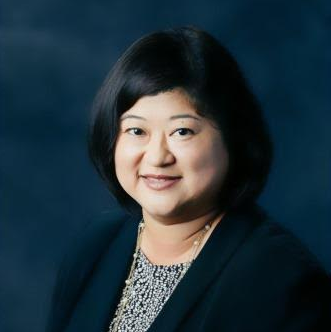
“Be comfortable about being uncomfortable, because that's the only way you're going to learn, and that's the only way to expand your experience into different fields.”
Willa Chen is an Engineering Director at Northrop Grumman in Sunnyvale, California, where she has worked for 26 years — the only company she has worked for since earning her bachelor's and master's degrees in electrical engineering from UCLA. She began her career as a systems engineer and has since worked across space, air, and submarine programs before moving into engineering leadership.
Top Talking Points
- Systems engineering is about connecting people, not just technical work. Willa described her role as the “glue” between disciplines — software, hardware, and antenna engineers — and stressed that communication matters as much as technical depth. She pushed back on the idea that engineering is purely a technical field, noting that even brilliant engineers need someone who can translate their work for other audiences.
- Career growth comes from getting comfortable with discomfort. Her path wasn't linear — she started as a math major, pivoted to electrical engineering (drawn to speech processing), and landed in systems engineering almost by chance at a career fair. Over 26 years, she deliberately rotated across space, air, and submarine programs every few years to keep learning. Her advice to her younger self: take more risks earlier, rather than “playing it safe.”
- Team dynamics matter as much as the end result. When asked about her most memorable project, she pointed not to a technical achievement but to a program where the team collaborated openly and made stressful work feel manageable. Her takeaway: the process and the people you work with often matter more than just hitting the milestone.
- AI in defense is promising but constrained. Because Northrop Grumman answers to government security requirements, she said the defense industry lags behind commercial use of AI — feeding sensitive or classified data into AI tools poses real cybersecurity risk. Her team currently uses AI for lightweight tasks (drafting emails, answering company-policy questions), not design or testing. She was optimistic about AI's potential but cautioned against relying on its output without human judgment.
Scroll down to read Willa’s entire interview
******************************
Full Transcript
Filler words, false starts, and duplicate passages have been lightly cleaned up for readability. Content and meaning are unchanged.
Elizabeth: Hi, Miss Willa. Thank you for coming to this interview. My name is Elizabeth, and I'm a high school senior wanting to explore STEM. I also want to inspire people in high school or younger to get involved in STEM, which is why I'm doing this project, “A Day in STEM,” interviewing people like you who work in STEM fields.
So first, could you tell me a little about yourself — your background, education, or what you do for work?
Willa: Hi, my name is Willa Chen. I'm one of the engineering directors at Northrop Grumman, out of Sunnyvale, California. I studied engineering at UCLA — I have a bachelor's and a master's, both in electrical engineering. After I graduated, I immediately joined a company called TRW, which later became Northrop Grumman's Space Sector. I joined as a systems engineer, and Northrop is actually the first and only company I've worked for — about 26 years now. I started as a systems engineer and continued exploring different roles, eventually landing where I am today as one of the directors of engineering. Along the way, since Northrop is a pretty big company, I've had the luxury of experiencing space programs, air programs, and now I'm in submarine programs.
Elizabeth: Does that mean because Northrop Grumman is such a big company with a lot of different areas, you have experience across other fields?
Willa: My experience is mostly in engineering. I've also done a bit of program management, and within engineering, a bit of electrical engineering early on — but systems engineering is the field I was mostly involved in. I always tell people it's kind of the jack of all trades. Systems engineers are the glue that holds the different disciplines together — software engineers, digital engineers, hardware engineers, antenna engineers. We make sure the end product or system actually works. As I've moved into management and now director roles, I don't do much hands-on engineering anymore, but I get exposure to a lot of disciplines — not just within engineering. I also work closely with production, global supply chain, and mission assurance. So, going back to your question: yes, but there's a lot of background to it, since it really depends on which product line you're working on within each sector of the business.
Elizabeth: That sounds really interesting. So does that mean you do less of the typical math and problem-solving side of engineering, and more work with people?
Willa: Do you mean for my role today?
Elizabeth: For the systems engineering work you described — is that different from what you're doing now?
Willa: Yes. Today I mostly manage people and projects. When I was a systems engineer, I came in working on a communication payload, and we did a lot of engineering analysis and ran simulations — so as a systems engineer, you still do real technical work. We may not be the experts in every area, but we need to know a bit about everything so we can talk with people when they share their detailed analysis with us. So you're right that we work a lot with people, but we also need a certain level of technical understanding and competency to communicate and bring everyone together toward the end product.
Elizabeth: With so many people from different backgrounds and fields, is it hard to communicate between them?
Willa: Communication isn't just about the discipline — it's about soft skills and personality too, and that's one of the more challenging things when working with engineers. You'll deal with engineers who are excellent at what they do but struggle to communicate it in a way others understand. That's where I come in as a systems engineer — having conversations with each subject matter expert and rephrasing or summarizing their work so it can be understood by other parties. Is it challenging? Definitely. But I think it's similar in every field. A business person deals with a lot of different business people; in medicine, you deal with patients and different types of staff. In every field, you have to work with people and communicate well — that's a common thread, and I think it's a good skill for people like you and other up-and-coming engineers to build.
Elizabeth: Do you think that's a common misconception about engineering — that it's not just about technical skills?
Willa: Yeah, for sure. Some engineers only want to do analysis and don't want to deal with other disciplines or people — and some companies do need people like that. But they may end up limited to just that one field. In general, I tell people that as a good engineer, you need to be able to listen to people and convey your ideas and your work to others. The ability to communicate and understand your audience becomes very important as engineers progress through their careers.
Elizabeth: Have there been major challenges working with a team, and what did you do about them? What was your most successful team?
Willa: As I've progressed in my career, my relationship with teams as a leader has shifted. But if I can give an example, it would be one of the first projects I worked on when I was an individual contributor on a satellite program for a communication payload. On that team, the dynamic was really good. People were always open to sharing ideas with each other and collaborated well. It was a very friendly environment, despite the schedule and technical challenges the program faced. When your team is good, it doesn't matter how hard or stressful the work is — it makes every day easier. We collectively met our deadlines and milestones, and I think that's what's important. When people ask about success, I think a lot of the time it's really about the process that gets you to the end. There have been plenty of programs I've been part of that reached their objectives, but what stays with me most is how the team worked together. That satellite program is the one I'd point to — technically challenging, I was continuously learning, and the team and leaders were really strong. That team dynamic shaped the early part of my career and made it easy to come to work every day.
Elizabeth: That's very nice.
Willa: Yeah.
Elizabeth: I was curious — when you mentioned “process,” what exactly is your process?
Willa: Which part do you mean?
Elizabeth: When you're making something or solving a problem — how do you approach it?
Willa: As an early-career engineer, when your manager or leader gives you a problem, there's almost always some kind of thought process involved. I was lucky — there was usually a mentor giving me background information and past examples I could apply to the analysis. Early in my career, a lot of it was performing analysis, writing simulation code, and then troubleshooting or debugging that analysis before sharing input and output with the team. Sometimes the output doesn't make sense, and you have to go back and revisit your analysis to see what went wrong — it's an iterative process. And what's important at the end is being able to take your results, summarize them, and present them in a way the rest of the team can understand. As you progress in your career, the problems get more complex, and it often depends on whether you have a team working with you. Almost always, you start by understanding the expectations and end goals, then work backward through the steps: what actions are needed, what analysis is needed, what inputs are needed, who you need to talk to. When the problem is big and vague, you really have to figure out what needs to get done.
Elizabeth: What got you into engineering, or how was the process of studying it?
Willa: I might be a little unique here. Growing up, I was always drawn to solving logical or mathematical problems, though I never thought I'd become an engineer — I just knew I was inclined toward STEM. I actually went to UCLA as a math major. In my second year, I started taking very theoretical math classes and found myself asking, “What am I going to do with this?” It didn't feel very practical, and even though I was drawn to STEM, I'm also a pretty practical person. That pushed me to explore engineering, especially since a lot of the math prerequisites overlapped with engineering prerequisites. I talked to a lot of friends across computer science, software engineering, mechanical, materials, civil, and electrical engineering, trying to figure out what I wanted. I ended up focusing my undergraduate electrical engineering studies on speech processing — it just interested me. We did a lot of signal-processing coursework and even conducted experiments on how people process sound and speech. I got my master's in a similar field, but when I joined Northrop Grumman as a systems engineer, I didn't end up practicing that specialty much beyond the core subjects like communication theory and signal processing.
Actually, how I got into systems engineering is kind of funny — it happened at a career fair. A recruiter from Northrop asked if I wanted to be a systems engineer, and at the time I had no idea what that meant. He explained that systems engineers see the big picture — they connect the dots, look at how different units come together to form an end product, system, or mission. That's what really got me interested, and I was fortunate to get the job. I've never been the type who wants to do just one type of analysis or be good at only one thing — I like having my hands in a bit of everything, which is exactly what a systems engineer does. So that's how I got started at Northrop, and because I enjoyed it, I stayed in a similar field across the various programs I worked on.
Elizabeth: So based on what you said, you went from math to electrical engineering, to systems engineering, and now you're in program management?
Willa: No — I was in program management for a few years, but now I'm back in engineering. I consider myself more like the manager of engineers. The people on my team do the hardcore, challenging engineering work, and my role is to make sure they have the resources and processes they need, and that they can come to me with the questions that help them do their jobs. So I don't do much hands-on engineering anymore, but I manage a team of engineers doing that challenging work.
Elizabeth: So would you say you need a deep understanding of each kind of engineering you oversee?
Willa: I wouldn't say deep — I need to understand, at a high level, what each type of engineer needs to do their job, so I can provide the right resources or help. We also have what we call chief engineers — subject matter experts in specific fields — that engineers can go to for detailed technical questions. My current role is really about making sure people have what they need to do their job well. So I need to know a little about everything, but I only really need a deep understanding of what my direct role requires.
Elizabeth: I’m curious, since your interests have changed a lot over time, is where you are now what you imagined you'd be doing?
Willa: It's pretty close to what I imagined. I'm a big believer — and I tell young engineers this — that you may not know exactly what you want to do today, but the important thing is to try different things. I started as a systems engineer, but roughly every three or four years, once I'd learned what I could from a program, I'd move to a different program phase, a different customer, or a different product line. I started in space, then explored air programs — learning different customers, requirements, and cultures — and now I'm working on submarine programs. Different customer, different mission, different culture, different requirements, and I've enjoyed all of it.
I don't know exactly what's next in my career, but I like to say: be comfortable about being uncomfortable, because that's the only way you're really going to learn and expand your experience into different fields. Every change I've made, I've enjoyed and gotten the most out of. So while my current role isn't exactly what I pictured, every step along the way has felt right.
Elizabeth: Is there any advice you'd give your younger self?
Willa: I'd say challenge yourself more. Early in my career, I always played it safe. It wasn't until maybe five or ten years in that I really started stretching myself — putting myself on different teams and taking on different challenges. Every time I did that, even though I felt nervous or stressed at first, I learned so much by putting myself in uncomfortable situations. I don't have regrets, but if I'd been a bit braver and taken more risks earlier, I think I could have gotten an even more varied experience than I have today.
Elizabeth: Has engineering shaped how you see the world, compared to before you knew about it?
Willa: I wouldn't say it's because of engineering specifically — I'd say it's because of the field I'm in, defense. Working for a defense company has really opened my eyes to different technologies, missions, and disciplines. My exposure comes from what I do every day at work, so it's shaped how I view things like security and different missions. Even within Northrop, the type of engineer each program needs is drastically different — on one program I was on, about 90% of the engineers were electrical engineers; on my current program, about 95% are mechanical engineers. There's always demand for different disciplines. I think what matters most is staying open-minded to doing different things.
Elizabeth: Your story really reflects that — you've been exposed to so many different things and done so much.
Willa: Yeah. One thing I'd share with people — you're probably going to talk to engineers who move between companies to get that same kind of varied experience: different products, different teams. I was fortunate to be at Northrop, because it's such a big company that I've been able to explore different products, teams, and even locations without leaving. That's what I tell people — one nice thing about Northrop is that you can explore a lot within the same company. But for people who do move around to try different things, I'd give them the same advice — they're doing what they need to do to broaden their experience and exposure in the field.
Elizabeth: That's very cool that they get to explore like that.
Willa: Yeah. Every summer we have interns come through, and some want to come back because we see they're good — but they want to try a different part of Northrop. As long as there's a need on a different program, we try to make that happen, so interns can get early exposure to different parts of the business. That works out well, because they get two or three months to try something and learn, with no big drawback — they go back to school and can try something different the next summer.
Elizabeth: Do you think interns have changed how the company functions, or affected your workflow at all?
Willa: Not really, because we expect interns to come in with limited experience, so we try to give them as much exposure as we can while also being hands-on in teaching them. But in the last several years, the interns I've seen have been very proactive and often bring in new ideas we hadn't thought of. A team that's been working on the same program for ten, fifteen, twenty years can get used to doing things a certain way and stop noticing potential improvements. When interns come in and get an assignment, they'll sometimes ask, “Why don't you do it this way?” and try something different — it opens our minds too. It's a two-way street: we're learning from the interns while they're learning practical, tactical skills at the company. It does mean more coaching and teaching on our end, but their fresh approach is often really eye-opening and helps us be more efficient as a company.
Elizabeth: I can understand that — I've also interned somewhere, so it's interesting to hear the other side of it.
Willa: Oh, okay.
Elizabeth: I've always wondered what it's like to be the person taking in interns.
Willa: Oftentimes we're prepared for it.
Elizabeth: We're also on our last five minutes, so I wanted to wrap up with a few questions.
Willa: Sure, sure.
Elizabeth: We haven't talked about AI, but it's a very popular topic right now — what are your thoughts on it?
Willa: AI in the defense industry is a bit tricky because of the national security aspect. Companies like Northrop Grumman are probably behind commercial industries in implementing it. To me, AI is a good thing if we use it carefully. I haven't dug into it too deeply, but I think it's a great tool for handling things that might take a human days, weeks, or months, in just hours. What matters is what the AI is trained on — if you train it on bad data, it's going to produce bad output. And if you rely on AI 100% without using your own judgment to check whether the output makes sense, that's dangerous. We could use AI to be more efficient in getting to an end product — I'm all for that. But I also worry that people will stop thinking altogether and just take AI's output as gospel. There needs to be a balance between leveraging what AI can give us and using human judgment to evaluate whether the input or output actually makes sense. As long as there's a clear understanding of that, I think it's a great thing.
Elizabeth: Are you planning to use AI in your own workflow?
Willa: We have to follow what our customer — the government — allows, since Northrop Grumman is a defense company and this ties into security. That's what I meant about being years behind commercial companies: we'd have to input national-security-related or classified requirements to train an AI in order to get something useful out of it, and that in itself is a high cybersecurity risk from the government's perspective. That doesn't mean we won't get there eventually. What I use AI for today is pretty simple — cleaning up a communication announcement, drafting a basic email announcing someone's promotion, that kind of thing. We also have an internal AI tool that helps answer company procedure, rules, and guideline questions quickly. We haven't used it heavily for designing, verifying, or testing anything, given the nature of our work — but that could change. It'll just take time for the defense industry, together with government security offices, to figure out what AI application really means in that world.
Elizabeth: I can understand why that would be difficult in the defense world. My last question: do you think it'd be easier to apply AI to other parts of the world or other industries?
Willa: You mean AI in general?
Elizabeth: Yeah.
Willa: I think especially for data processing, there's a lot of opportunity. If you need a data analyst to work through thousands or hundreds of thousands of lines of code or data points, AI — if trained well — could take something that would take a human days or months and do it in minutes or hours. For applications like that, I think it's very useful.
Elizabeth: Yeah, it’d be very interesting to see how AI can be implemented into the world. I think that was our last question. Thank you for coming.
Willa: No, thank you — that was good.
Elizabeth: Of course. It was very interesting to hear what you had to say.
Willa: Thanks, Elizabeth.
0 Comments